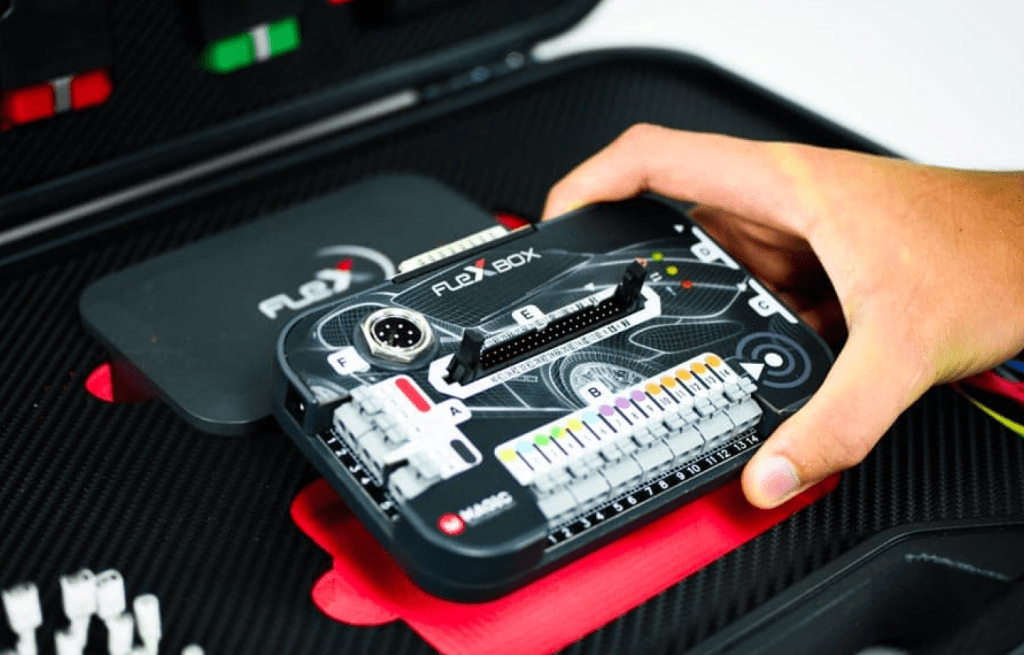
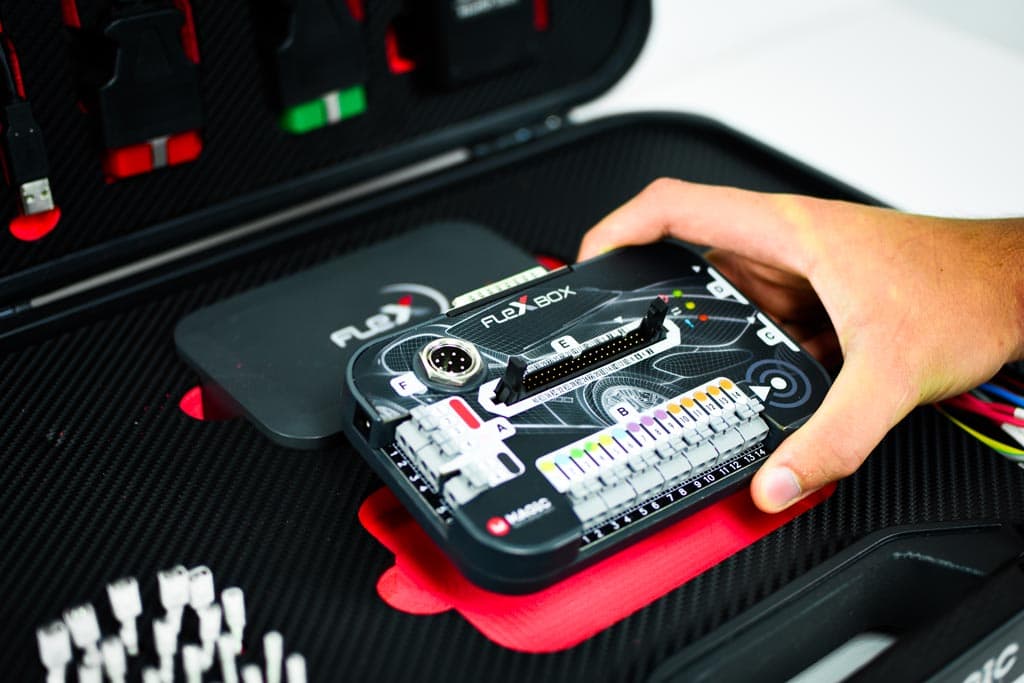
Triumph ECU tuning has taken a step forward with a new set of FLEX protocols that reach two more Keihin control units through the bike’s own diagnostic port. The latest FLEX release adds OBD support for the Keihin KTKS_v1, which runs on a Renesas RH850 processor, and the KHR4, which uses an SH72531 microcontroller. Both units are fitted to Triumph EU4 and EU5 motorcycles. In plain terms, a tuner can now read and write the engine map without opening or removing the ECU. That makes Triumph ECU tuning quicker and it lowers the risk that comes with stripping a control unit on the bench.
What the New FLEX Protocols Mean for Triumph ECU Tuning
Remapping and tuning get used as if they are the same thing. They are not. Remapping is the act of reprogramming the software inside the ECU. Tuning is the wider term that also takes in hardware changes like high-flow filters and exhaust work. All remapping is a form of tuning. Not all tuning is remapping. These new protocols sit firmly on the remapping side, giving direct access to the software that decides how a Triumph engine runs.
With the protocols active, a tuner can take a virtual read of the unit, read the map area over OBD, then write changes that adjust engine management, throttle response and fuelling. For most road riders this is Stage 1 work, software only, with no hardware swapped. This is where Triumph ECU tuning gets practical, because the gains come from a properly built file rather than parts on a shelf. The tool behind it is Magic Motorsport FLEX, which VIEZU supplies and uses every day.
Which Triumph Models Are Supported
Triumph tuning interest tends to gather around specific models, and the new coverage maps onto some of the most popular.
The supported list spans the:
- EU4 and EU5 platforms, including the
- Street Triple 765 R
- Tiger 1200 XRT
- Tiger 1200 GT
- Tiger 800 XR
- Triumph Street Triple 765 tuning
- Triumph Tiger 1200 tuning
- Triumph Tiger 800 tuning
- Triumph Speed Triple
These are the bikes the protocols were built around. Speed Triple owners benefit as well, since Triumph Speed Triple ECU tuning shares the same Keihin foundation as the Street Triple.
The wider Triumph range sits across older and newer ECUs, so coverage depends on the exact unit in the bike. Speed Twin and Bonneville riders asking about Triumph Speed Twin tuning or Triumph Bonneville tuning are worth checking on a case by case basis.
You can see the full Triumph line-up on the Triumph motorcycle tuning pages.
The Keihin ECUs Inside Triumph EU4 and EU5 Bikes
Triumph fits Keihin engine control units across much of its EU4 and EU5 range. The two units these protocols reach are the:
- KTKS_v1, built on the RH850 processor
- KHR4, built on the SH72531 microcontroller.
These are the brains that manage fuelling and ignition on the bike. Riders also search for a Triumph self-learning ECU, which describes how modern engine management adapts its fuel trims as it runs. A custom map sets the baseline the ECU then works around, which is the reason a bespoke file beats a generic one.
Working Through the OBD Port
The headline with this release is its OBD access. A tuner connects through the diagnostic port and works on the live unit, instead of opening the ECU for a bench or boot connection. That removes a step and it also removes the risk that comes with handling a control unit.
Reading and Writing Times
Read and write times differ by unit.
- The KHR4 takes around 1 hour to read and a little over a minute to write.
- The KTKS_v1 reads in about 12 minutes and writes in roughly 3 minutes.
Cables, Adapters and Software Packages
To connect, you need the FLX2.68 cable for EU5 and EU5+ bikes or the MMS03.002 adapter.
The protocols run on the Flex ECU and Full software packages, and on the Flex Bikes OBD, Bench and Boot package, in both Master and Slave versions. These all run on a FLEX tuning tool, and the relevant coverage can be added through master and slave protocol activations.
OBD, Bench and Boot Connection Methods
FLEX works in three connection modes. OBD runs through the diagnostic port with the unit still in the bike. Bench means taking the ECU out and connecting to it directly on the workbench. Boot, or bootloader, is a deeper mode used for locked units and for recovery. These new Triumph protocols add the OBD route for the two Keihin units, which is the least invasive of the three. Bench and boot still earn their place for recovery jobs and for any unit that does not yet have OBD coverage.
Master and Slave Tools Explained
FLEX comes as a Master or a Slave tool, and the difference matters for Triumph ECU tuning. A Master tool works with open, unencrypted files. The user can read a file, edit it themselves, or send it to any master tuner they choose.
A Slave tool reads and writes too, but its files are encrypted. A Slave user sends each file to their linked Master, who modifies it and returns it. For a workshop new to bikes, a Slave tool paired with a strong Master gives access to professional files without having to write maps from day one. If you want the full picture, read the difference between master and slave tools.
FLEX is also one of the strongest tools on the market for cloning, which counts when a damaged unit needs replacing or recovering. Master users can request files through StageX, the tuning software that runs alongside FLEX.
Warranty, Insurance and Road Use
A remap is a modification, so a rider should tell their insurer before riding a tuned bike. Leaving it undeclared can affect a claim later. A professional Triumph remap stays road legal as long as the bike still meets the official emissions rules for its age. Reading and writing a map through the standard ECU does not strip out any emissions hardware, so a well-built road map keeps the bike compliant.
On warranty, a remap will not always void manufacturer cover, but a maker can refuse a claim on drivetrain parts if it finds a modification. This is where VIEZU’s insurance-backed warranty gives dealers and riders a layer of protection that a file on its own cannot.
Why Choose VIEZU for Triumph ECU Tuning
VIEZU builds custom tuning files and proves them on a 3000bhp in-house dyno, so a Triumph map is tested under real load rather than estimated by a calculator. Files come through a 24-hour file portal, with the file service open seven days a week, so a workshop is never left waiting on a Sunday job. Behind that sit live technical support, worldwide trade supply, and the VIEZU Technical Academy for tuners who want to learn to write their own maps.
Every file is backed by a 30-day no-quibble money-back guarantee, a lifetime software guarantee and an insurance-backed warranty. For Triumph ECU tuning, that mix of proven files, real support and genuine protection is what separates a professional result from a generic download. To talk through Triumph ECU tuning for your own bike or your workshop, get in touch with the VIEZU team.
About the Author
This article was written with input from Paul Busby, CEO of VIEZU Technologies Ltd, who leads the company’s growth and its day to day operations. Paul is a vehicle engineer by background, with experience in post-production defect investigation, new vehicle derivative homologation, and the development of warranty and guarantee programmes at manufacturer level. His experience in engineering has shaped how VIEZU approaches ECU work, where a Triumph file has to be built and tested as opposed to copied from a generic source.

Triumph ECU Tuning FAQs
Can you tune a Triumph through the OBD port?
Yes, you can tune a Triumph bike through the OBD port. The new FLEX protocols read and write the Keihin KTKS_v1 and KHR4 units over OBD, so a tuner connects through the diagnostic port without opening the ECU. This is the least invasive route and suits EU4 and EU5 bikes fitted with these units. Other Triumph units still need a bench or boot connection.
Which Triumph models can be tuned with the new FLEX protocols?
The release covers EU4 and EU5 models including the Street Triple 765 R, Tiger 1200 XRT, Tiger 1200 GT and Tiger 800 XR. Coverage depends on the exact Keihin unit in the bike, so models like the Speed Twin and Bonneville are worth checking individually before booking.
Is Triumph ECU tuning safe on EU5 bikes?
A professional remap that is built and tested properly is safe on EU5 bikes. The risk comes from generic tuning files and rushed work, not from the act of remapping itself. VIEZU tests its tuning files on an in-house dyno and backs them with an insurance-backed warranty.
What is a Keihin ECU?
A Keihin ECU is the engine control unit that manages fueling and ignition on the bike. Triumph fits Keihin units across much of its EU4 and EU5 range, including the KTKS_v1 and KHR4 reached by the new protocols.
How long does reading and writing a Triumph ECU take?
It depends on the unit. The KHR4 takes around 1 hour to read and just over 1 minute to write. The KTKS_v1 reads in about 12 minutes and writes in roughly 3. A workshop can plan a booking slot around those times.
Do I need to tell my insurer after a Triumph remap?
Yes. A remap is a modification, so you should declare it to your insurer before riding. Failing to do so can affect a claim later. A professional tune will keep your bikes emissions rules for its age, so it stays road legal.