
Unlock GPEC2A ECUs for OBD Tuning with KESS3
Free unlock. Same-day tuning.
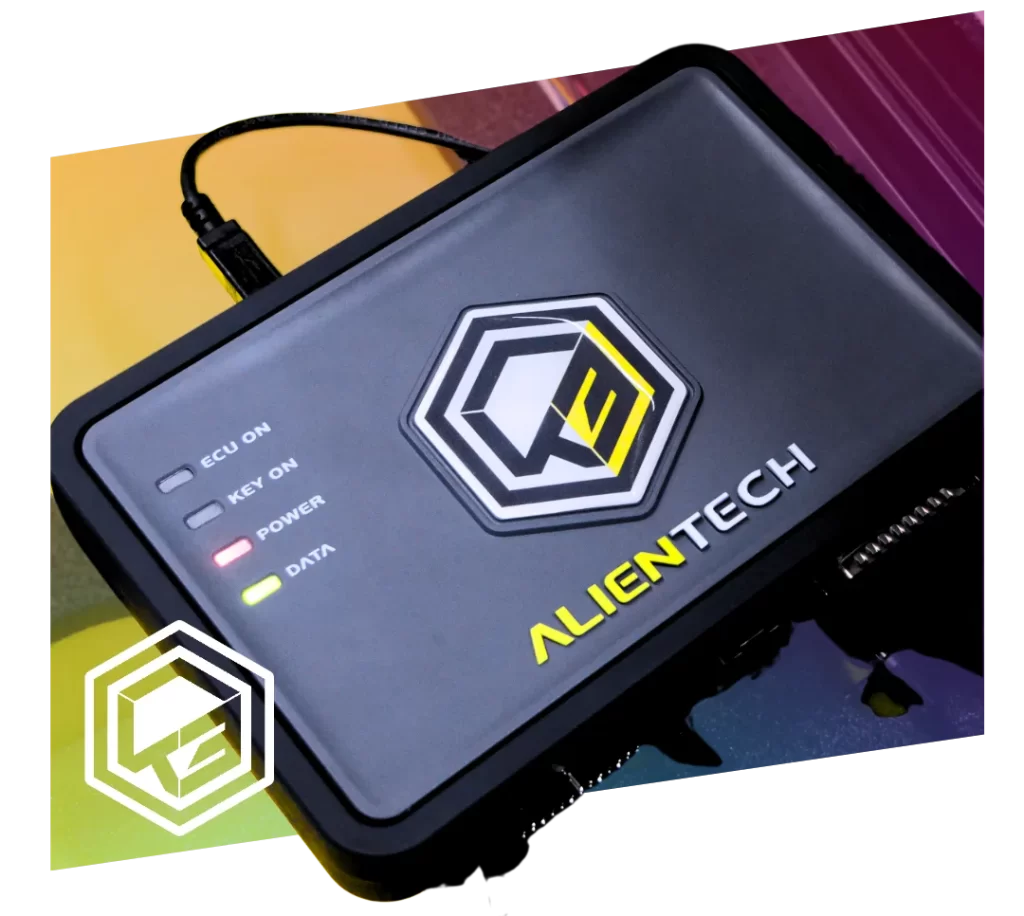
The world of ECU tuning is constantly evolving, and Alientech has once again delivered a meaningful technical advance for professional tuners. A recent KESS3 update now allows tuners to unlock and patch GPEC2A ECUs on the bench, permanently enabling safe and repeatable OBD tuning.
This development is particularly significant for workshops working with high-performance and late-model vehicles from the Stellantis group, including Jeep, Dodge, and Chrysler platforms.
From a technical standpoint, this update doesn’t simply “add coverage”—it fundamentally changes the access model for the GPEC2A ECU. It transforms what was previously a bench-only ECU into one that can be serviced efficiently through the OBD port after a one-time preparation, streamlining workflows and improving profitability.
The GPEC2A ECU Tuning Challenge
The GPEC2A Engine Control Unit, used extensively across Dodge, Jeep and Chrysler vehicles (including the Dodge Challenger 6.2 SRT Hellcat), has historically been difficult to access due to advanced security mechanisms implemented by the manufacturer. These ECUs utilize protected boot sequences and memory access restrictions that prevent standard OBD read/write operations.
Previously, professional tuners were required to perform bench or boot-mode access for every tuning operation, even for minor revisions. From a workshop perspective, this introduced increased labour time, higher handling risk, and reduced feasibility of same-day tuning.
A Breakthrough: The KESS3 GPEC2A Patch
The latest KESS3 protocol addresses these limitations by altering the ECU’s access permissions in a controlled, manufacturer-aware manner. It introduces a one-time ECU patch, applied on the bench, which modifies the internal security state to allow subsequent OBD communication.
Technically, this patch offers several safety assurances:
- Preserves Structure: It preserves the original ECU software structure.
- Protects Data: It does not overwrite calibration data.
- Enables Access: It alters the boot/communication logic to permit OBD write access.
Once applied, the ECU no longer requires repeated bench access for tuning. This is ideal for high-performance vehicles requiring revisions; you perform a single controlled unlock, followed by safe, repeatable OBD tuning.
Bench setup and tool tips
Simon White shares expert wiring tips in the video:
-
Use a labelled Bench mode cable for GPEC2A
-
Apply correct BOOT-line resistance (KESS3)
-
Use a non-slip bench or clamp for secure contact
-
Always back up the ECU before patching
How to Unlock the GPEC2A ECU with KESS3
The procedure remains strictly professional and should only be carried out by trained technicians using the correct equipment. It involves opening the ECU to make direct connections before applying the software patch.
1. Preparation and Opening the ECU
The goal of the opening process is to gain controlled access to the PCB without flexing or stressing the board. Excessive leverage or contamination can permanently damage sensitive components.
-
Bend the Tabs: Carefully bend back the metal tabs located around the unit just enough to create clearance for the main ECU board.
-
Separate the Lid: Insert a flat edge or screwdriver between the ECU lid and the main frame. Crucially, lever away from the circuit board (encroaching no more than 4-5mm).
-
Clean the Contact: Use a fibreglass pen to gently clean the protective seal off the specific resistor/connection point (CNF1). Note: Cleaning this contact is particularly important, as poor contact here can interrupt the boot sequence during the critical patching phase.
2. Making the Bench Connections
With the ECU open, you must establish a connection that allows the KESS3 to take control of the ECU during its startup phase.
-
Elevate the ECU: Place a support (like a roll of workshop tape) between the two connector plugs to allow the ECU to sit flat on the bench without crushing the wires.
-
Bench Cable: Connect to the grey connector plug for power and communication as per the manual.
-
Boot Pin (CNF1): Using a BDM frame with pogo pins is strongly recommended as it ensures repeatable, non-invasive contact without soldering. Ensure the probe makes solid contact with the copper pad/resistor you cleaned earlier.
3. Applying the Patch
This process is designed to be recoverable and safe.
-
Identify: Connect the KESS3 and press “Identify.”
-
Backup: Select the ‘ECU Patch’ function. The software will first create a complete backup of the ECU’s internal memory (Micro and EEPROM). This ensures full recovery is possible if required and preserves the original software state.
-
Patch: Once the backup is saved, the software will apply the patch to the backup file and write it back to the ECU, updating access permissions while retaining factory calibration logic
-
Completion: The software will generate a new backup file with a
.PTextension. The ECU is now in an OBD-enabled state.
4. Sealing the ECU and Moving to OBD
Once patched, the ECU can be resealed and treated like any other OBD-capable unit. No boot pin or bench connection is required for future tuning.
-
Remove the boot pin and bench connections.
-
Apply a small layer of high-temperature resistant automotive silicone around the lid to ensure it is watertight.
-
Bend the tabs back into place and reinstall the ECU in the vehicle.
Watch Simon White’s full tutorial on YouTube for a complete walkthrough, including wiring tips and real workshop footage.
A great time to purchase KESS3
This unlock process is designed specifically for Alitentech KESS3, and it’s the tool we recommend. However, similar methods are also possible using:
Who should act now
- Tuning workshops looking to support more US vehicles
- Existing KESS3 users who haven’t added this ECU yet
- New tuners ready to invest in a tool with high-value protocols
This update is a strong reason to upgrade now. With no licence cost and high vehicle coverage, KESS3 offers immediate ROI for tuners working on Vehicles , including Dodge, Jeep and RAM.
Become a VIEZU dealer to access tools, files and support.
Supported vehicle models
This method applies to most GPEC2A ECUs found in FCA vehicles from 2015–2021.
Important Note on Security:
It is vital to distinguish between ECU-level security and vehicle network security.
-
The KESS3 patch unlocks the ECU for OBD writing.
-
Vehicles manufactured after 2018 are equipped with a Secure Gateway Module (SGM). You will still need to use an approved bypass method (like an FCA 12+8 cable) to allow diagnostic communication through the vehicle network to reach the now-unlocked ECU.
Why Choose VIEZU?
KESS3 excels with GPEC2A ECUs because it applies a manufacturer-specific unlock process that aligns with the ECU’s architecture, rather than forcing generic boot access. This significantly reduces the risk of corruption compared to improvised methods.
For over 15 years, VIEZU has supported thousands of tuning professionals. We provide training resources, technical guidance, and file support to ensure that updates like this can be implemented safely and profitably in real workshop environments.
Need tools or tuning support?
VIEZU offers everything you need to start unlocking and tuning GPEC2A ECUs:
Why Choose VIEZU?
KESS3 excels with GPEC2A ECUs because it applies a manufacturer-specific unlock process that aligns with the ECU’s architecture, rather than forcing generic boot access. This significantly reduces the risk of corruption compared to improvised methods.
For over 15 years, VIEZU has supported thousands of tuning professionals. We provide training resources, technical guidance, and file support to ensure that updates like this can be implemented safely and profitably in real workshop environments.
GPEC2A ECU Tuning FAQ
What makes the KESS3 a leading tuning tool?
The Alientech KESS3 combines OBD, Bench, and Boot tuning into a single device. It utilizes ECU-family-aware protocols and automatic backup handling to ensure safety.
Is the GPEC2A patch a one-time procedure?
Yes. Once applied, the ECU no longer requires repeated bench access. All subsequent calibration updates can be performed via the OBD port.
What are the risks of opening the ECU?
Opening an ECU carries risk if the board is stressed or flexed. However, the KESS3 update reduces mechanical risk overall because the ECU only needs to be opened once, rather than for every tuning revision.