How to Write a Stage 1 Gasoline Tuning File with StageX – MED17
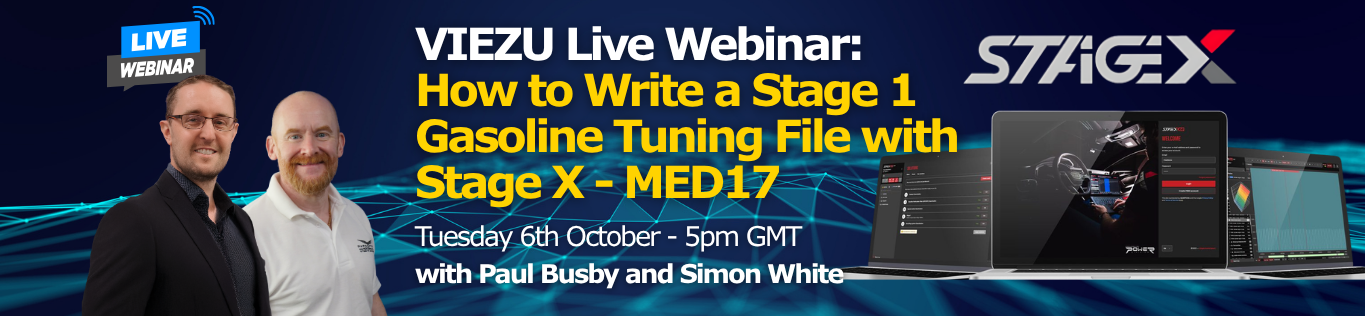
Our VIEZU Technical Academy webinar, How to Write a Stage 1 Gasoline Tuning File with StageX – MED17, has now taken place and the full recording is available to watch on YouTube.
In this practical session, the VIEZU team works through the process of approaching a Stage 1 gasoline calibration using StageX, with the Bosch MED17 ECU as the practical focus.
The webinar looks at the key calibration areas involved in building a structured Stage 1 tune, including torque, load, boost, ignition, fuelling, lambda, knock control and engine protection.
If you missed the live session, or want to revisit any of the technical areas covered, you can watch the complete webinar below.
Watch the Full Webinar
Watch: How to Write a Stage 1 Gasoline Tuning File with StageX – MED17
What You’ll Learn
The webinar provides a practical introduction to the process involved in creating a Stage 1 gasoline calibration using StageX.
During the session, we cover:
- How to approach an original gasoline ECU file before making changes
- Navigating and reviewing a Bosch MED17 file within StageX
- Identifying the main calibration areas required for Stage 1 tuning
- Driver request and torque control
- Torque limiters and their relationship with the wider calibration
- Load and boost control
- Ignition timing
- Fuelling and lambda strategy
- Knock control
- Engine and component protection strategies
- How the main gasoline calibration areas work together
- Building a more structured Stage 1 tuning workflow
Why Stage 1 Gasoline Tuning Matters
A Stage 1 tune may be designed around a standard vehicle with no major hardware modifications, but that does not mean the calibration itself should be basic.
The ECU is constantly managing requests and limits across multiple areas of the engine management strategy.
Changes to requested torque can influence load. Load can influence boost requirements. Boost, ignition timing, fuelling and lambda all need to be considered alongside knock control, temperatures and the ECU’s built-in protection strategies.
Understanding those relationships helps tuners move away from simply changing maps by a fixed percentage and towards making more informed calibration decisions.
In this webinar, we’ll look at the logic behind the process and how StageX can be used to identify, review and modify the relevant calibration areas.
What You’ll Learn
The webinar is designed to give you a clearer understanding of the process involved in creating a Stage 1 gasoline calibration using StageX.
During the session, we’ll look at:
- How to approach an original gasoline ECU file before making changes
- How to navigate and review a Bosch MED17 file within StageX
- Identifying the main calibration areas required for Stage 1 tuning
- Understanding driver request and torque control
- How torque limiters interact with the wider calibration
- Load and boost control considerations
- Ignition timing and its role in gasoline tuning
- Fuelling and lambda strategy
- Understanding knock control
- Engine and component protection strategies
- How the main gasoline calibration areas work together
- Building a more structured Stage 1 tuning workflow
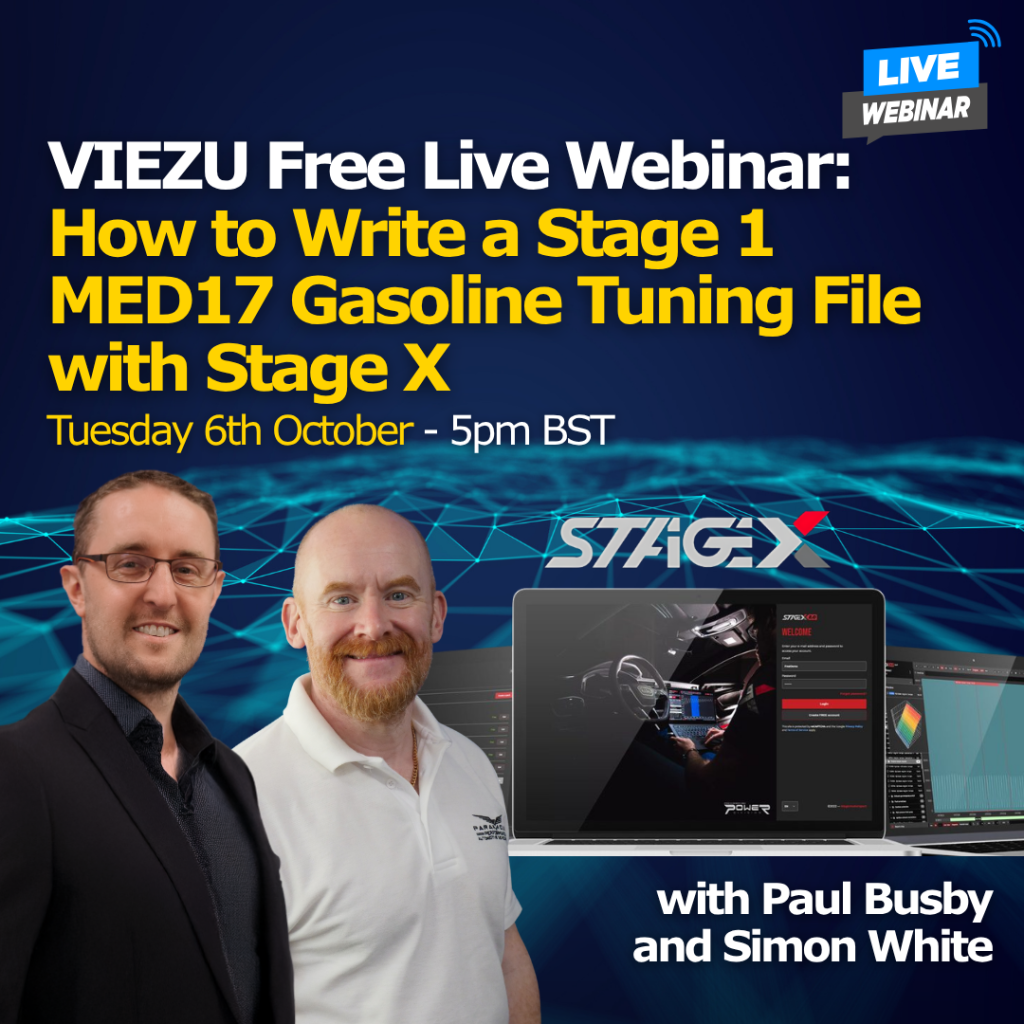
What the Webinar Covers
During the webinar, we’ll take a practical look at the process of developing a Stage 1 file rather than treating each map as an isolated adjustment.
Torque Request and Torque Control
We’ll look at how the ECU interprets driver demand and manages requested torque, including why torque limiters and related strategies need to be considered as part of the overall tune.
Load and Boost
On turbocharged applications, increasing performance requires an understanding of the relationship between requested load, boost pressure and the ECU’s torque model.
We’ll discuss the areas that should be reviewed and why boost should not simply be treated as a standalone target.
Ignition Timing
Ignition timing plays a fundamental role in gasoline engine performance.
We’ll look at the importance of understanding the base ignition strategy, how timing relates to engine load and why knock control needs to be considered when developing a calibration.
Fuelling and Lambda
A Stage 1 tune also needs an appropriate fuelling strategy.
We’ll look at lambda targets, enrichment and how fuelling requirements relate to load, boost, temperature and engine protection.
Knock Control and Protection Strategies
Modern ECUs contain extensive monitoring and protection strategies.
Understanding these functions is important when increasing engine output, particularly when working with different fuel qualities, operating temperatures and real-world vehicle conditions.
Why This Webinar Matters
One of the easiest mistakes to make when starting gasoline file writing is to treat each map independently.
A torque increase, boost increase or ignition change can have consequences elsewhere in the ECU strategy.
A more professional approach starts with understanding what the ECU is trying to achieve, identifying the maps and limiters involved, and then making changes that work together.
StageX can help tuners identify and organise important calibration maps, but understanding why a map exists and how it interacts with the rest of the ECU strategy remains an important part of professional file writing.
This webinar is designed to help bridge that gap.
Key Technical Takeaways
By the end of the session, attendees should have a clearer understanding of:
- How to approach a stock MED17 calibration
- Which areas should be reviewed before tuning begins
- How torque-based gasoline ECU strategies work
- The relationship between driver request, torque, load and boost
- Why ignition timing needs to be considered alongside knock control
- How lambda and fuelling form part of the overall tuning strategy
- Why protection strategies should remain part of the calibration process
- How to use StageX to identify and work through the relevant maps
- How the main calibration areas interact
- How to create a more organised and repeatable Stage 1 workflow
Who Should Watch?
This free webinar is suitable for:
- Existing professional tuners
- New tuning businesses
- StageX users
- Technicians moving into gasoline tuning
- Tuners currently working predominantly with diesel vehicles
- Workshops looking to bring more file-writing capability in-house
- Anyone wanting a better understanding of Bosch MED17 calibration
- Tuners who want to better understand the logic behind Stage 1 file writing
Whether you’re already using StageX or are looking to improve your understanding of gasoline ECU calibration, this session will provide practical information you can apply to your own tuning work.
Why Learn with VIEZU?
VIEZU Technologies is one of the world’s leading ECU tuning providers. With over 500,000 tuning files delivered and more than 1,500 global dealers, we back every session with real experience.
Our Technical Academy is the go-to place for hands-on training using professional tools like WinOLS, KESS3, ECM Titanium and more.
Next Live Webinar
Live Q&A: Tuning Tools and the VIEZU File Portal
Our next free VIEZU webinar takes place on Tuesday 13th October 2026 at 5:00 PM UK time.
With a large number of tuning tool updates released during 2026, this live session will look at what’s new across the professional tuning tool market, specific tool features and applications, and how the VIEZU File Portal works.
Joining the session will be:
Paul Busby – CEO
Simon White – Managing Director
Ian Armstrong – Head of Sales & Commercial Operations
We’ll be discussing areas including:
- Recent tuning tool releases and updates
- ECU and TCU coverage
- OBD, Bench and Boot capabilities
- Unlocking solutions
- Specific tool features and applications
- Master and Slave tuning tools
- How the VIEZU File Portal works
- Submitting and managing tuning file requests
The session is FREE to attend and will be driven by questions from those joining us live.
Date: Tuesday 6th October 2026
Time: 5:00 PM UK time
Location: Live online webinar
Cost: FREE to attend
Want to go further after the webinar and train with the industry leaders? Contact the VIEZU team today or explore our Technical Academy courses.
Global Webinar Start Times
-
United Kingdom (BST): 5:00 PM
-
Europe (CET): 6:00 PM
-
South Africa (SAST): 6:00 PM
-
Dubai (GST): 8:00 PM
-
Brazil (BRT): 1:00 PM
-
USA – Eastern (EST): 12:00 PM
-
USA – Pacific (PST): 9:00 AM
-
Australia – Sydney (AEDT): 3:00 AM, Wednesday 7th October
-
Australia – Perth (AWST): 12:00 AM, Wednesday 7th October
Register free and join us live.