
The Magic Motorsport FLEX Boot Glitch solution gives professional tuning workshops a way to unlock compatible Bosch MD1 and MG1 ECUs using their own FLEX equipment.
To help tuners understand what the process involves, the VIEZU technical team has produced a free practical video guide demonstrating the main stages of the Boot Glitch unlock on a Bosch MD1CS003 ECU.
The video takes you inside the ECU and shows how the unit is prepared, connected and unlocked before it is made ready for future reading and writing operations.
What Is the FLEX Boot Glitch Unlock?
Some modern Bosch MD1 and MG1 ECUs use advanced security measures which restrict normal programming access. These protections have traditionally meant that certain ECUs needed to be sent to an external specialist for unlocking before a tuning workshop could read or programme them.
Magic Motorsport’s Boot Glitch solution allows compatible ECUs to be unlocked directly using the FLEX tool.
The initial unlock is completed in Boot mode. Once this has been carried out successfully, the ECU can be prepared for subsequent reading and writing through the supported FLEX connection method.
For tuning businesses, this creates a more controlled workshop process. The ECU can remain with the tuner, reducing the additional handling and turnaround associated with sending compatible units elsewhere.
Watch the MD1CS003 Unlock Process
In the free video, the VIEZU technical team demonstrates the main stages of the process using a Bosch MD1CS003 ECU.
The demonstration includes:
- Opening the Bosch MD1CS003 ECU
- Locating the required resistor
- Temporarily removing the resistor
- Connecting the FLEX Boot and Bench cables
- Starting the Boot Glitch unlock procedure
- Checking the ECU once the unlock has completed
- Refitting the resistor
- Preparing the ECU for reading and writing
This gives FLEX users a practical view of the equipment, preparation and care involved before attempting the procedure themselves.
Opening and Preparing the ECU
The Boot Glitch procedure begins with the ECU being carefully opened.
Opening an ECU correctly is an important part of the process. Damage to the casing, circuit board or internal components can create problems before the unlock has even started. Suitable tools, a clean work area and careful handling are essential.
Once the ECU is open, the correct connection points and components must be identified using the current instructions available within the FLEX software.
In the MD1CS003 example shown in the video, a specific surface-mounted resistor must be temporarily removed as part of the unlock preparation.
The component is small, so suitable soldering equipment and experience working with ECU circuit boards is required. Care must be taken to avoid damaging the resistor, surrounding components or the circuit board itself.
Connecting the Magic Motorsport FLEX Tool
After the ECU has been prepared, the FLEX Boot and Bench connections can be made.
The FLEX software provides the connection diagram and instructions for the selected ECU protocol. These instructions should be checked before connecting power or beginning the unlock.
The video shows the physical setup used for the MD1CS003, including the ECU connections, FLEX hardware and cables required for the procedure.
Connections can vary considerably between ECU models. The connection shown for one MD1 or MG1 ECU should never be assumed to apply to another unit.
Always identify the exact ECU model and follow the current FLEX software instructions for that specific protocol.
Starting the Boot Glitch Procedure
Once the ECU and FLEX tool are connected correctly, the Boot Glitch procedure can be started through the FLEX software.
During this stage, the software communicates with the ECU and completes the required security unlock. The connection process may take a different amount of time depending on the ECU, software version and individual unit.
The ECU and tool should remain connected to a stable power supply throughout the operation. Cables, adapters and ECU connections should remain undisturbed until the software confirms that the procedure has finished.
Following the instructions displayed by FLEX is essential. Interrupting the power supply, using the wrong connection points or changing the setup during the operation could place the ECU at risk.
Checking and Reassembling the ECU
After the unlock has completed, the ECU should be checked before it is returned to normal programming use.
For the MD1CS003 procedure shown in the video, the temporarily removed resistor is carefully refitted. The circuit board is then inspected to make sure the component is secure and that no surrounding areas have been disturbed.
The ECU can then be connected using the relevant supported FLEX method and checked for communication.
Once communication has been confirmed, the tuner can proceed with the appropriate reading, backup and writing operations supported by the selected protocol.
The ECU casing should also be cleaned and resealed correctly before it is returned to the vehicle. This helps protect the electronics from moisture, dirt and contamination after the work has been completed.
What Can Happen When the Procedure Goes Wrong?
The Boot Glitch unlock is a specialist procedure and should not be treated as a simple software operation.
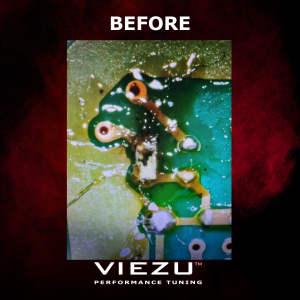
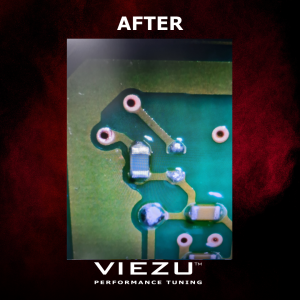
We have seen ECUs brought to VIEZU after unsuccessful attempts to complete the unlock elsewhere. In one recent case, the ECU had been opened and worked on incorrectly, leaving damaged connections and untidy soldering around the affected components.
Our technical team carefully cleaned the circuit board, repaired the affected area and completed the unlock successfully.
This example shows why the correct tools, connection information and electronics experience are so important. A mistake involving a small component, solder pad or connection point can quickly turn an unlock procedure into a more complicated ECU repair.
If you are not comfortable opening the ECU, removing and refitting surface-mounted components or following Boot connection diagrams, VIEZU can complete the process for you.
VIEZU MDG1 ECU Unlock Service
Workshops that do not want to complete the Boot Glitch procedure themselves can use the VIEZU in-house MDG1 ECU unlock service.
You can bring the ECU directly to VIEZU or post it to our technical team. We will check the ECU for compatibility, complete the required unlock procedure and prepare it for the supported reading and writing method.
The service costs £299 for VIEZU Approved Dealers (£350 for all other dealers)
ECUs sent to us by post are subject to an additional £25 return shipping fee.
Terms and conditions apply. Compatibility must be confirmed before the ECU is sent or brought to VIEZU. We recommend providing clear photographs of the ECU label and full vehicle details so our technical team can check the unit before booking the work.
Where an ECU has already been opened, modified or damaged during a previous attempt, additional inspection or repair work may be required. Any extra work or charges will be discussed once the condition of the ECU has been assessed.

Why Carry Out the Unlock in Your Own Workshop?
Bringing compatible MD1 and MG1 unlock work into your own workshop can improve the way these jobs are managed.
Potential benefits include:
- Keeping the ECU within your workshop
- Reducing reliance on external unlock services
- Avoiding additional shipping and handling
- Improving control over job scheduling
- Supporting faster customer turnaround
- Expanding the range of modern vehicles your business can tune
- Making greater use of your existing FLEX equipment and protocols
The procedure requires suitable technical ability, ECU handling experience and the correct equipment. It should only be carried out by technicians who are comfortable opening ECUs, identifying electronic components and working with Boot connections.
For workshops without this experience, the VIEZU unlock service provides a practical alternative.
Check ECU Compatibility Before Starting
Boot Glitch support is specific to the ECU family, processor and software protocol.
Before accepting a vehicle or removing its ECU, check the exact ECU identification against the latest Magic Motorsport FLEX vehicle and protocol information.
The VIEZU team can help FLEX users check compatibility, identify the required protocol and understand which cables, adapters or software packages may be needed.
Support is available for workshops considering their first FLEX tool, existing FLEX users looking to expand their services and tuners who would prefer VIEZU to complete the unlock on their behalf.
FLEX Tools, Protocols and Training from VIEZU
VIEZU supplies Magic Motorsport FLEX tools, Master and Slave configurations, protocol activations, accessories and technical training.
Our team can help you choose a FLEX package based on the vehicles and ECU types you expect to work with. This includes guidance on OBD, Bench and Boot programming, along with support for workshops building their ECU tuning services.
Professional FLEX training is also available through the VIEZU Technical Academy, covering tool operation, safe ECU connection methods and practical programming procedures.
For tuners using a Slave tool, VIEZU can provide tuning files and technical support through the VIEZU File Portal.
Magic Motorsport FLEX Boot Glitch FAQs
What is the Magic Motorsport FLEX Boot Glitch?
The Boot Glitch is an unlocking procedure available through Magic Motorsport FLEX for compatible Bosch MD1 and MG1 ECUs. It allows the tuner to complete the security unlock using a Boot connection before preparing the ECU for supported reading and writing operations.
Which ECU is used in the VIEZU video?
The free VIEZU demonstration uses a Bosch MD1CS003 ECU. The video shows the ECU being opened, prepared, connected and unlocked using the Magic Motorsport FLEX tool.
Does the ECU need to be opened?
The MD1CS003 procedure shown in the video requires the ECU to be opened for the initial Boot Glitch unlock. The requirements vary between ECU models, so the current FLEX software instructions should always be followed.
Why is a resistor removed during the procedure?
For the MD1CS003 demonstrated in the video, a specific resistor is temporarily removed as part of the preparation for the Boot Glitch operation. It is refitted after the unlock. The component and procedure may be different on other ECUs.
Can the ECU be damaged during the unlock?
There is a risk of damage if the ECU is opened incorrectly, the wrong component is removed, solder pads are damaged or the FLEX connections are made incorrectly. The procedure should only be completed by someone with the appropriate tools and electronics experience.
Can VIEZU complete the unlock for me?
Yes. VIEZU offers an in-house MDG1 ECU unlock service for £299 including VAT, subject to compatibility and terms and conditions. You can bring the ECU to VIEZU or send it by post.
Is there a return shipping charge?
Yes. A £25 return shipping fee applies to ECUs sent to VIEZU by post.
Can VIEZU repair an ECU after a failed unlock attempt?
VIEZU can inspect ECUs that have been damaged or worked on previously. Repair may be possible depending on the condition of the ECU. Additional repair charges may apply and will be discussed after inspection.
Can the ECU be programmed after the unlock?
Once a compatible ECU has been successfully unlocked and prepared, it can be read and written using the connection method supported by the relevant FLEX protocol.
Is the procedure the same for every MD1 and MG1 ECU?
No. Connection points, cables, adapters and electronic components vary between ECU models. Always select the exact ECU protocol and follow the latest wiring diagrams and instructions shown within the FLEX software.
Do I need soldering experience?
The MD1CS003 procedure shown involves temporarily removing and refitting a small surface-mounted resistor. Suitable soldering equipment and experience working with sensitive electronic components is strongly recommended.
Can VIEZU check whether an ECU is supported?
Yes. Contact VIEZU with the vehicle and ECU details. Clear photographs of the ECU label can help the technical team identify the unit and check the available FLEX protocol.